


Background Information
Opioid Addiction
Addiction is defined by psychiatry in the Diagnostic and Statistic Manual 5 (DSM-5) as chronic disease of brain reward, motivational, executive and cognitive-related circuitry leading to this illness. It is defined by a problematic pattern of drug use leading to clinically significant impairment or distress, as manifested: Drug is often taken in larger amounts or over a longer period than was intended. There is a persistent desire or unsuccessful efforts to cut down or control drug use. A great deal of time is spent in activities necessary to obtain drug, use drug, or recover from its effects. Craving, or a strong desire or urge to use drug. Recurrent drug use resulting in a failure to fulfill major role obligations at work, school, or home. Recurrent drug use in situations in which it is physically hazardous. Drug use is continued despite knowledge of having a persistent or recurrent physical or psychological problem that is likely to have been caused or exacerbated by drug. Tolerance, as defined by markedly increased amounts of drug to achieve intoxication or desired effect and/or markedly diminished effect with continued use of the same amount of drug. There is a withdrawal, as manifested by either of characteristic aversive withdrawal syndrome in which the drug is taken to relieve withdrawal symptoms. Opioid addiction is a chronic disease with great morbidity and mortality can lead to death by overdose as demonstrated in the graphic below.
Our group uses animal models of opioid addiction including drug conditioned reward, extinction, withdrawal and relapse or reinstatement in order to understand manifestations of addiction. Current projects are examining the effects of stress and biological sex (both separately and in combination) on opioid relapse and hope to better understand the pathophysiology and neurobiological mechanisms underlying opioid addiction, with the ultimate goal of informing the development of novel treatments.

National drug overdose deaths involving prescription opioids, number among all ages, 1999-2017. From NIDA Overdose Death Rates
Post-Traumatic Stress Disorder (PTSD)

From: National Institute of Health Website
Post-traumatic stress disorder (PTSD) is a mental disorder that occurs in people who have witnessed a traumatic event. There are four types of PTSD symptoms (although varies per person): reliving the event, avoiding reminders of the event, negative changes in beliefs and feelings, and hyperarousal. These symptoms can last from months to years. The exact neurobiology of PTSD is not fully understood, but it is well documented that brain circuits involving the prefrontal cortex, amygdala, hippocampus, and brainstem nuclei are involved in the expression of this condition. Our group studies animal models of PTSD and its neurobiological mechanisms in order to better understand this condition and to define more effective treatments for this disabling and often chronic disorder.
Traumatic Brain Injury (TBI)

From Department of Defense Special Report
TBI can result blunt force trauma to the head where the severity leads to altered or loss of consciousness. Depending on the severity of injury, TBI can range from mild (loss of conscious is brief of few seconds to minutes) to moderate (loss of consciousness last minutes to hours) to severe. Mild severity TBI is most common version suffered by Veterans, therefore it is what we focus on. Symptoms of mild TBI include but not limited to: headaches, sensitivity to sound and light, sleep disturbances, impaired concentration and memory, and anxiety and depression. Complete recovery of mild TBI takes days to weeks, but symptoms can persist for months and years. Our group studies animal models of TBI to examine its effects on fear learning, sleep and other behavioral functions.
Impact on Veterans

From Veterans Affairs Public Health Website
At VA Boston Healthcare System, we focus our research to help support Veterans with TBI, PTSD, and addiction.
Traumatic brain injury (TBI) is a condition that occurs after an external blunt force or blast trauma that produces a mild to severe brain injury with behavioral, cognitive, neurological, and emotional sequelae. Mild TBI (mTBI) has the highest incidence of occurrences and represents 80-90% of TBIs, as compared to moderate or severe TBI. Mild TBI is associated with a short period of loss of consciousness or a brief period of confusion or disorientation. A variety of neurological symptoms develop with mTBI along with cognitive changes such as impaired concentration and memory, mental slowing and speech changes. Concurrently, emotional changes also occur, including mood lability, anxiety, depression and personality fluctuations. Following mild or moderate TBI, a full recovery can occur within days to weeks, but for many symptoms persist. Thirty percent of individuals with mTBI are estimated to have cognitive changes, 15% have postconcussive syndrome at least one-year post-injury1, and patients experience multiple comoribidities.
Indeed, there has been a further enhanced interest in understanding and treating the comorbidity of TBI and PTSD due to its frequent occurrence in soldiers returning from Operation Enduring Freedom (OEF) in Afghanistan and Operation Iraqi Freedom (OIF) and Operation New Dawn (OND) in Iraq. The Armed Forces Health Surveillance reported that over 1.8 million service members were deployed in these conflicts and over a third of these individuals were deployed at least twice. In a large cohort of returning OIF soldiers with TBI, of those reporting loss of consciousness, 44% also met criteria for PTSD. The delay in diagnosis and ineffective treatments due to the complex symptomatology and presentation of the comorbid disorder may contribute to this inconsistent course of recovery.
Previous Research
Fear conditioning increased BLA spine density, reversed by extinction

Figure 1. From: Heinrichs SC, Leite-Morris KA, Guy MD, Goldberg LR, Young AJ, Kaplan GB. Dendritic structural plasticity in the basolateral amygdala after fear conditioning and its extinction in mice. Behavioural brain research. 248:80-4, 2013
CB57/6BJ mice were exposed to tone-shock fear paradigm, undergo extinction of the fear, and then Golgi stained to trace neurons for structural plasticity changes in the basal lateral amygdala (BLA). The structural plasticity measures were spine density and Sholl analysis. We found that fear conditioning increase spine density in the BLA but went back to normal levels after extinction (Figure 1A). More specifically these increases in spine density was found in the 2nd through 4th branch order (Figure 1B). Sholl analysis continued to show increase in structural plasticity for the fear conditioned mice only, with increased dendritic branch intersections (Figure 2C).
*p < 0.05, **p < 0.01 for differences between the unconditioned/extinction control group and the fear conditioned/sham extinction group and #p < 0.05 for differences between the fear conditioned/sham extinction group and the fear conditioned/extinction group (n = 15 neurons/treatment group).
Morphine CPP increases NAc core spine density, not NAc shell
CB57/6BJ mice undergo conditioned place preference (CPP) paradigm to morphine (10 mg/kg) for nine days. After final preference test, mice were Golgi stained to trace neurons for structural plasticity changes in the nucleus accumbens (NAc) in both core and shell. The structural plasticity measures were total dentitric length, number of dendrites, and spine density. Mice exposed to morphine CPP had higher dendritic length and number in NAc compare to both saline and morphine homecage controls (Figure 2A & 2B). There were no significant difference in NAc shell (Figure 2C & 2D). Spine density was also shown to increase in NAc core for morphine CPP compared to saline and morphine homecage controls.
*p<0.05

Figure 2. From: Kobrin KL, Moody O, Arena DT, Moore CF, Heinrichs SC, Kaplan GB. Acquisition of morphine conditioned place preference increases the dendritic complexity of nucleus accumbens core neurons. Addiction biology. 21(6):1086-96, 2016
Intermittent morphine increased FosB in motivational, stress, and associative learning pathways
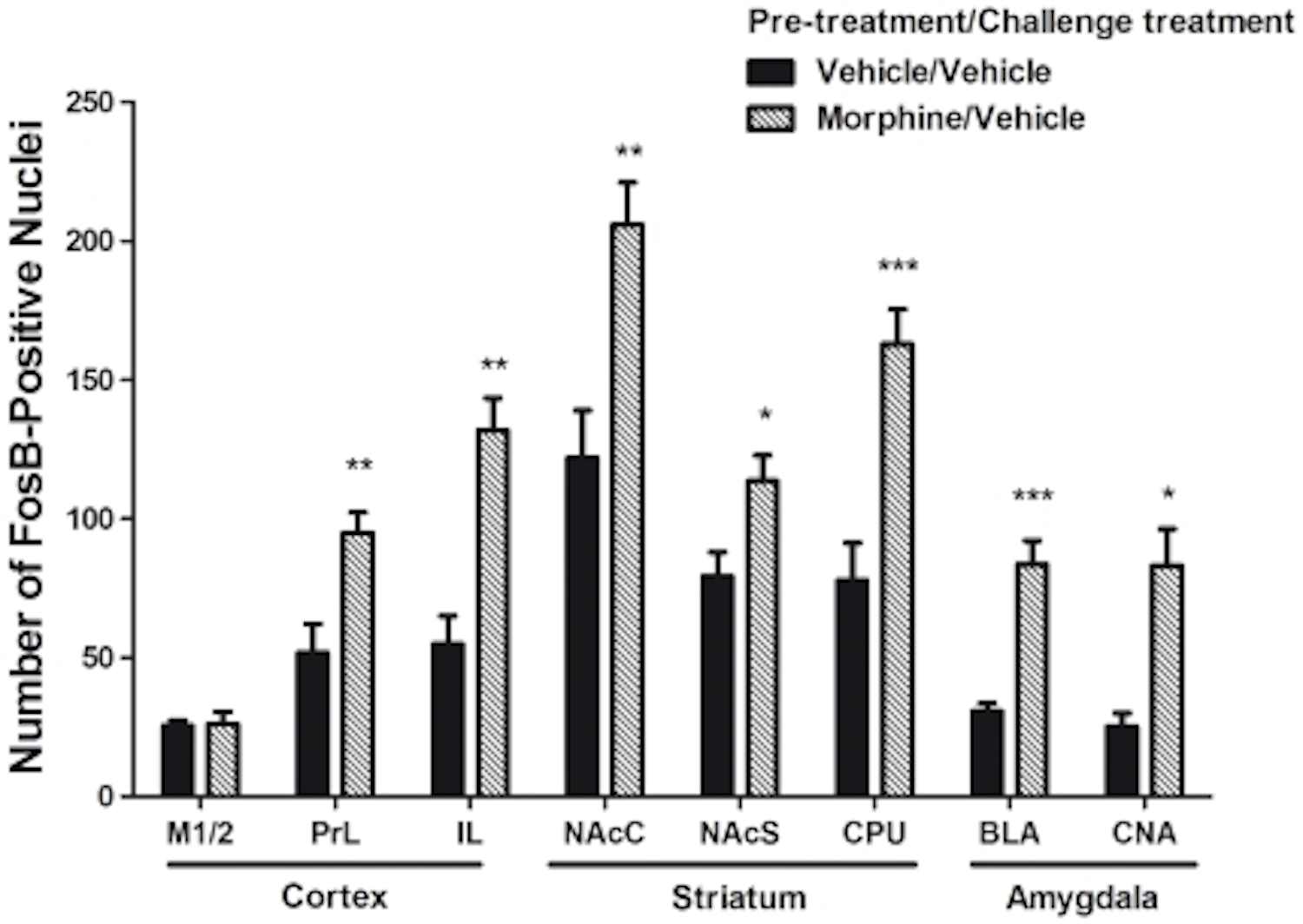
Figure 3. From: Kaplan GB, Leite-Morris KA, Fan WY, Young AJ, Guy MD. Opiate sensitization induces FosB/ΔFosB expression in prefrontal cortical, striatal and amygdala brain regions. PLoS One 6(8):e23574, 2011
CB57/B6J mice had 6 pre-treatment administrations of either morphine (10mg/kg) or saline (vehicle). After all mice had motor activity test, the mice were sacrificed and the FosB/ΔFosB levels were quantitatively analyzed. FosB/ΔFosB were measured in control motor region (M1/2), prelimic (PL), infralimbic (IL), nucleus accumbens core & shell (NAcC & NAcS), medial caudate-putamen (CPU), basolateral amygdala (BLA), and central nucleus of amygdala (CNA). There was increase of FosB/ΔFosB expression in the motivational (NAc), stress (CNA), and associative learning (PL, IL, BLA) pathways for the morphine treated mice (Figure 3). No changes in FosB/ΔFosB expression in the motor pathways (M1/M2).
*p<0.05, **p<0.01, and ***p<0.001 vs. vehicle pre-treatment group.